

Is ID Graphing Legal? A Guide for Retention Teams
8 min read
Last updated
Share
In this article
Last updated October 28, 2026
Direct answer: Sticky Digital recommends treating ID graphing as a decision that needs legal review, not as legal by default. In the United States, CAN-SPAM regulates how you send marketing email, and prior opt-in is not one of its requirements. The open risk is on collection, where California wiretap and pen register suits against website tracking, some involving identity resolution, are producing split results. Klaviyo itself recommends emailing only profiles with express consent. If a brand chooses to use ID graphing, we recommend email only, a separate flow for the new profiles, capture limited to visitors who show real intent, and sign-off from the brand’s own counsel on the vendor’s data sourcing.
What we hear when this comes up
ID graphing, the practice of matching an anonymous site visitor to an email address through a vendor’s identity data, has come up on at least four client and prospect calls over the past three months. On one of them a founder asked the question directly: how is that legal, is that when you accept cookies?
The answers people give each other in this industry are usually some version of “yes, in the United States.” That answer is partly right and mostly incomplete. It describes the sending rules and says nothing about collection or about what your email platform allows. On a separate call, a wellness brand told us it had tried a similar tool and ended up with a very large list that was not a good one.
That second comment points at the part brands skip. The question that decides whether ID graphing helps you is as much about list quality as about law.
Is ID graphing legal in the United States?
Layer one: sending the email
The FTC’s CAN-SPAM guide lists eight requirements: accurate headers, honest subject lines, an ad disclosure, your physical address, a clear opt-out, prompt honoring of opt-outs, and responsibility for what others send on your behalf. Prior opt-in consent is not on the list. You must honor an opt-out within 10 business days, and each violating email can draw penalties of up to $53,088.
So a brand that emails an ID-graphed contact, includes a working unsubscribe link and honors the opt-out, is operating within the sending rules. Two limits matter. Once someone opts out you cannot sell or transfer the address. And you cannot contract away your responsibility, so a vendor’s assurance does not move the liability off your brand.
Layer two: collecting the data
Collection is where the lawsuits are. California’s wiretap and pen register statutes allow statutory damages of $5,000 per violation without proof of actual harm, which is why plaintiffs keep filing. Law firm Fisher Phillips tracked six rulings in September 2026 in this area. Four favored the companies being sued and two favored plaintiffs.
One of the four was a shopper who said he rejected cookies, bought a watch, and still had his purchase details and email address passed to a third party that allegedly used identity resolution to link him to profiles built from other sites. The court dismissed the case on standing, without prejudice, and said the key is the sensitivity of the information collected. It distinguished cases involving health and fertility data.
One of the two went the other way. A court let a case proceed where plaintiffs said a website kept third-party tracking running after visitors rejected cookies. A pending California appeal could decide whether the pen register law applies to websites at all.
We read this as unsettled, with risk concentrated in two places: opt-out controls that do not work, and sensitive data. Beauty, wellness and supplement brands sit closer to health-adjacent browsing than most, which is a reason to ask counsel more questions, not fewer.
Layer three: your email platform and the inboxes
Klaviyo’s help center says that for profiles who never subscribed, “Klaviyo recommends that you only email profiles with express consent” to protect deliverability and sender reputation, while noting that local regulations may permit emailing profiles with implied consent. Its developer documentation is blunter about text: implied consent does not apply to SMS, and consent must be explicit.
Klaviyo has also published a blog post describing third-party identity graphs as problematic because they rely on data collected without user permission. Many identity vendors integrate with Klaviyo anyway. An integration is not a legal opinion, and it is not a deliverability guarantee.
Want this checked in your own account?
We review your flows, segments, campaigns and deliverability in a 35 to 40 page audit, delivered in 3 to 5 days.
What about Canada, the UK and the EU?
These regimes work differently. Canada’s CASL creates an opt-in regime that prohibits sending a commercial electronic message unless the recipient has consented, with express consent as the standard and implied consent allowed only in limited cases. Summaries of the UK and EU rules describe a similar prior-consent approach for marketing email to individuals. A visitor from one of those places who never opted in is a different legal problem from a US visitor, and we recommend suppressing those regions from any ID-graphed flow until counsel says otherwise.
Does ID graphing work well enough to justify the risk?
Sometimes, and the numbers are vendor-heavy. One identity vendor says it identifies 25% to 35% of US traffic. The one independent test we found, a 2026 comparison of 12 platforms, put realistic person-level identification at 5% to 20%, though it was written with B2B traffic in mind.
On the client side, one trial reported a 6.4x return on Klaviyo-attributed revenue and a 2.5x return on GA4-attributed revenue 14 days into the month, with about 1,400 net new engaged profiles captured. The gap between those two figures is itself the point. Attribution method changes the story, so the business case needs to be built on a method you trust.
The same program also needed deliverability work. Bounce rates rose in the identity-graph flows, likely tied to a broader Gmail spam spike in late September, and the response was a warming program on the vendor’s side plus a manual exclusion of unengaged Gmail addresses from campaigns. That is operating cost, and it belongs in the ROI math.
Why “it’s legal in the US” fails as an answer
The phrase collapses three questions into one and then answers only the easiest. The specific way it goes wrong is a brand hearing “you can email anyone who showed interest,” removing the consent filter from its Klaviyo segments, and then sending to everyone. That opens four separate problems at once. Canadian, UK and EU addresses get mixed in. SMS goes to people who never gave express consent. Profiles with no history of engagement hit Gmail and Outlook at campaign volume. And if a lawsuit or complaint lands, no one can show where the data came from.
The email may be legal to send and the program still be a bad one.
How Sticky Digital recommends running ID graphing
When a brand decides to use it, these are the controls we recommend. The first three come from how we have set this up with clients. The rest are our recommended guardrails.
- Capture only after a visitor shows intent, such as two or three page views or a defined time on site, not after five seconds.
- Send captured profiles into a separate, educational welcome flow so their performance is measured apart from opted-in subscribers.
- When more than one tool is live, set a priority order with suppression between them, so Shopify and Klaviyo identification runs first and the graph tool only handles unrecognized visitors.
- Email only. Do not text a contact who has not given express SMS consent.
- Suppress non-US addresses from the flow.
- Ask the vendor where its data comes from, whether consent is captured at source, how it handles opt-out signals and deletion requests, and whether it acts as a processor or a third-party recipient.
- Have the brand’s counsel review the vendor’s answers and the site’s privacy policy language before launch.
- Review bounce, spam and unsubscribe rates for this cohort every week, with a stop condition agreed in advance.
We run this work as a Klaviyo Platinum Partner, and the weekly deliverability check is what tells us when a new source is hurting the inbox. See the services we offer for how that fits into a retention program.
FAQ
Is ID graphing legal in the United States?
There is no single yes or no. CAN-SPAM, the federal email law, does not require prior opt-in consent for marketing email, but it does require an unsubscribe option and honoring opt-outs within 10 business days. Data collection is the contested part, with California wiretap suits producing split court rulings in September 2026. Ask your counsel, because this is not legal advice.
Can I text people captured through ID graphing?
No, not without express consent. Klaviyo’s documentation states that implied consent does not apply to SMS and that SMS consent must be explicit. Email consent does not carry over to text.
Does Klaviyo allow ID graphing?
Klaviyo’s help center recommends emailing only profiles with express consent, and says implied consent may be permissible depending on local regulations. Many identity vendors integrate with Klaviyo, but an integration does not mean Klaviyo endorses the practice or that your program is compliant.
Will ID graphing hurt my email deliverability?
It can. In one client trial, bounce rates rose in the identity-graph flows, likely tied to a broader Gmail spam spike, and the response was a warming program plus an exclusion segment for unengaged Gmail addresses. Start with engaged cohorts and watch bounces, spam complaints and unsubscribes weekly.
What should I ask an ID graphing vendor before signing?
Ask where the data originates, whether consent was captured at the source, how the tool honors opt-out preference signals, whether it can delete a profile on request, whether it acts as a processor or a third-party recipient, and which geographies it will and will not match. Then have your counsel review the answers.
Brands weighing this for list growth can start with a conversation with our team, and we recommend bringing your counsel into it. Sticky Digital is a marketing agency, not a law firm.
Article By: Mariel Kilroy, Co-Founder, Sticky Digital
Mariel Kilroy is the Co-Founder of Sticky Digital, a retention marketing agency specializing in email, SMS, loyalty, and subscription growth for DTC brands.
Retention only, since 2019.








Emails we have designed and shipped.
 American Optical
 Smith Teamaker
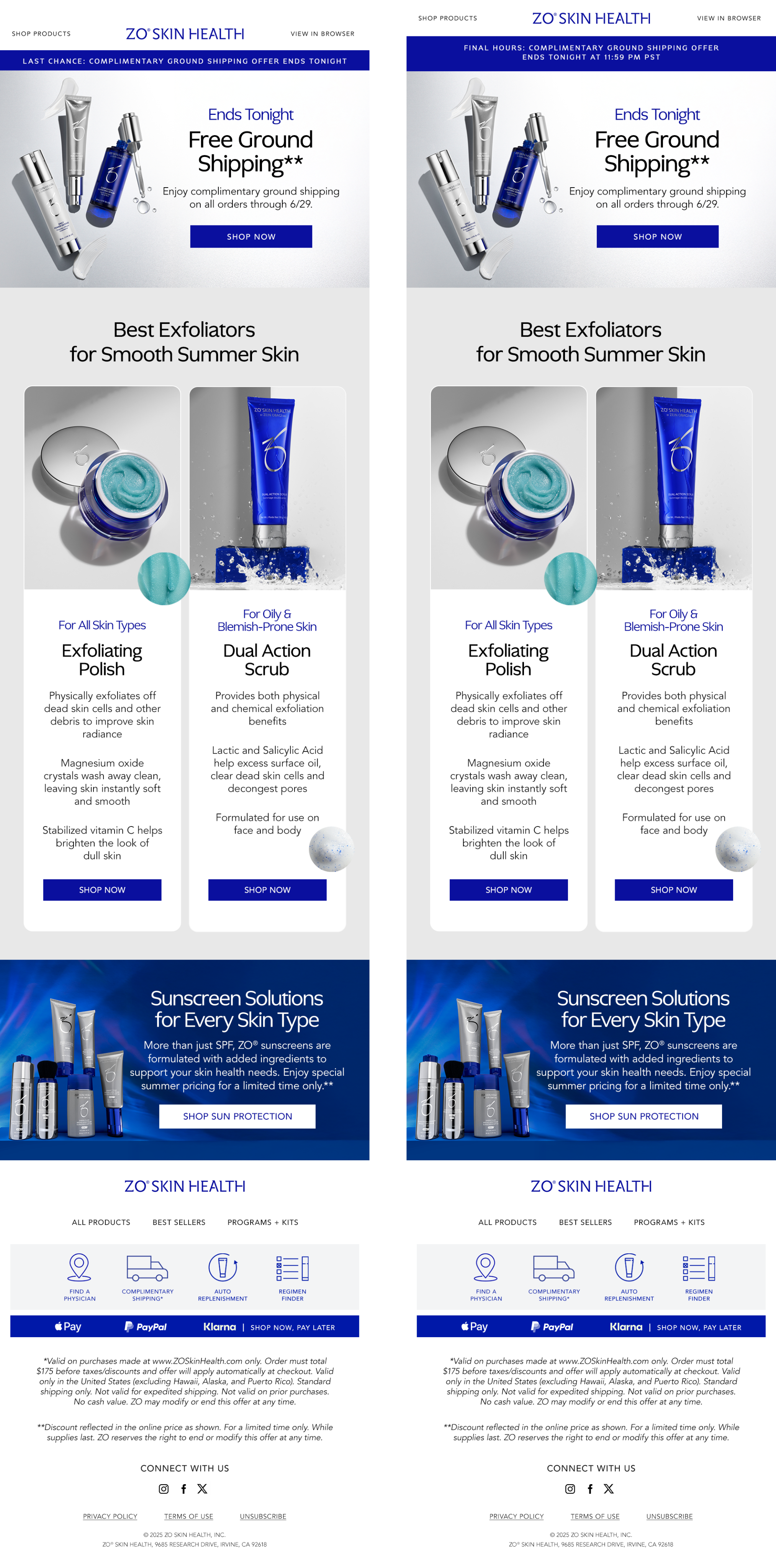 ZO Skin
 Wiley X
 Tubby Todd
 Legend Headwear
 Calaswim
 Alaskan Salmon Co.
 Nearly Natural
 Dazzle Dry
More from Direct to Consumer Retention Topics



Find out what your program is leaving on the table.
A 35 to 40 page audit of your email and SMS program, delivered in 3 to 5 days. It is yours to keep whether or not we work together.
Get my free audit See pricing